

Make completed form values static without choosing unnecessary image loss
A completed form should be a reading copy that cannot be edited as form fields.
Open Flatten PDF →Follow these steps
- Choose the supported source file or files from your device.
- Review whether you still need selectable text, links or interactive forms.
- Choose form-field mode to retain text, or image mode to flatten the entire appearance.
The document and the intended outcome
A completed form should be a reading copy that cannot be edited as form fields. Use form flattening when suitable; choose whole-page image mode only when its losses are acceptable.
Make this example work for your file
For a completed form, check every visible answer before flattening. Keep the editable original separately. A read-only reading copy is useful for sharing, but it prevents the recipient from correcting fields in the normal form interface.
Choose only the settings this case needs
For form mode, inspect saved field appearances and selectable body text. For image mode, expect loss of text selection, links and editable fields, and inspect every page.
When the example needs a different approach
Preserve the original and review the form in its original editor. Unsupported or overlapping field appearances may require a different safe flattening path.
A checked example you can try
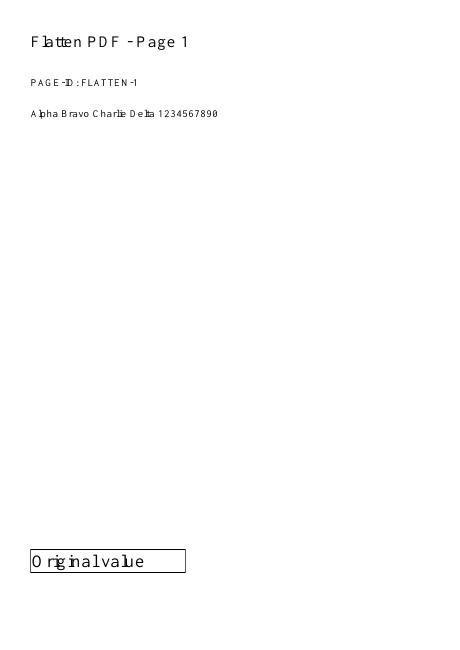
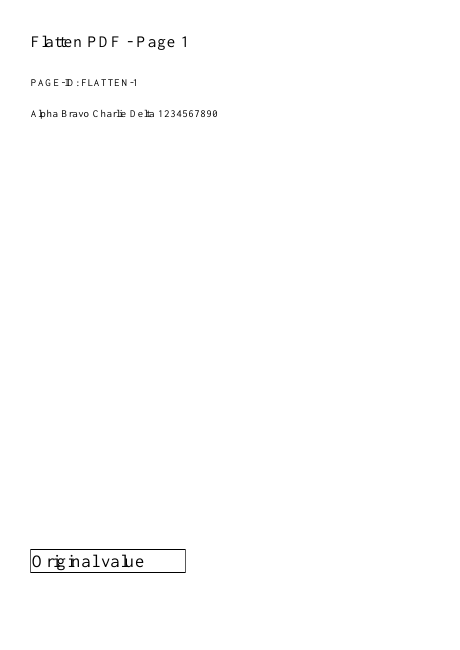
Field values remain as text; editable fields are absent.
Settings used in this engine check
- quality
- compact
- angle
- 90
- margin
- 20
- start
- 1
- columns
- 2
Check the result
Form-field mode preserves selectable text and makes form fields read-only. Image mode removes searchable text, links and editable forms, and may enlarge the file.
Keep the original. When this task produces a file, reopen the download in the application where you will use it and inspect the affected pages. An illustration explains the operation; it is not a recorded processing test.
Practical tips
- For form mode, inspect saved field appearances and selectable body text. For image mode, expect loss of text selection, links and editable fields, and inspect every page.
- Form flattening targets fields, not every annotation. Use the appropriate annotation cleanup or whole-page mode only when that is the intended result.
- Preserve the original and review the form in its original editor. Unsupported or overlapping field appearances may require a different safe flattening path.
Questions
A comment remains after form flattening?
Form flattening targets fields, not every annotation. Use the appropriate annotation cleanup or whole-page mode only when that is the intended result.
A filled value disappears?
Preserve the original and review the form in its original editor. Unsupported or overlapping field appearances may require a different safe flattening path.
What is this tool useful for?
Make filled form fields read-only or create static image pages.
What should I check in the result?
Form-field mode preserves selectable text and makes form fields read-only. Image mode removes searchable text, links and editable forms, and may enlarge the file.