

Complete an interactive application form and keep a revisable copy
An application PDF contains text fields, a checkbox and a dropdown.
Open Fill PDF forms →Follow these steps
- Open the original PDF containing fillable fields.
- Complete supported text fields, checkboxes and dropdowns. Review all fields before export.
- Choose an editable or flattened output, then reopen it and confirm the saved values.
The document and the intended outcome
An application PDF contains text fields, a checkbox and a dropdown. Fill the supported controls, review all values, then choose editable or flattened output according to the recipient.
Make this example work for your file
For a registration form, fill a short test with deliberately long values. Save and reopen it in the intended reader. Pay special attention to checkboxes and multiline fields rather than checking only the first text box.
Choose only the settings this case needs
Start with the original form and check supported field types. Save an editable copy before flattening if you expect to revise a value later.
When the example needs a different approach
Reopen the downloaded PDF and check both visible appearance and field value. Some readers cache form appearances; verify using the actual exported copy.
A checked example you can try
Name field contains Alex after reopening.
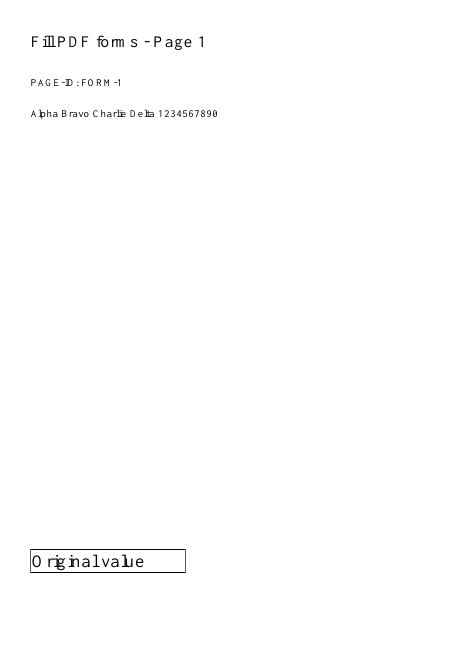
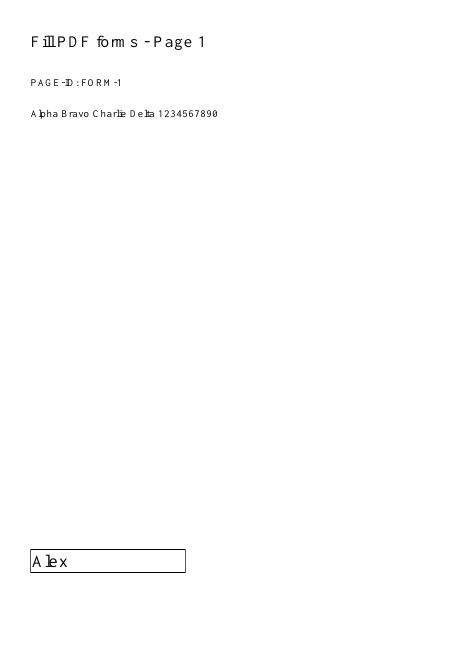
Settings used in this engine check
- quality
- compact
- angle
- 90
- margin
- 20
- start
- 1
- columns
- 2
- fields
- {"Name":"Alex"}
Check the result
Unsupported form types may not work. Flattening makes the completed values static, so keep an editable copy if you will need to revise them.
Keep the original. When this task produces a file, reopen the download in the application where you will use it and inspect the affected pages. An illustration explains the operation; it is not a recorded processing test.
Practical tips
- Start with the original form and check supported field types. Save an editable copy before flattening if you expect to revise a value later.
- The source may be a scan or static artwork. Use Add text for a visual fill-in, or obtain a genuine interactive version from the issuer.
- Reopen the downloaded PDF and check both visible appearance and field value. Some readers cache form appearances; verify using the actual exported copy.
Questions
No fillable fields are detected?
The source may be a scan or static artwork. Use Add text for a visual fill-in, or obtain a genuine interactive version from the issuer.
The value looks correct but is not saved?
Reopen the downloaded PDF and check both visible appearance and field value. Some readers cache form appearances; verify using the actual exported copy.
Why are there no fields?
The PDF may be a scan or a static form without interactive fields.
What does flatten mean?
Flattening makes field values part of the page appearance rather than editable form controls.